
Château Margaux: History of One
of the Médoc’s Most Prestigious Estates
Few names carry as much weight in the wine world as Château Margaux. Its history spans more than five centuries: from a medieval fortress on a low rise of land to the estate that would become, in 1855, the only Bordeaux château to receive a perfect score in the classification that still defines fine wine today. Understanding that history is understanding why the Médoc, and Bordeaux as a whole, hold the place they do in global wine culture.
From a Medieval Fortress to a Vineyard (12th-16th Century)
The site has been occupied since at least the 12th century, when a fortified structure known as “La Mothe” from the old French motte, a small mound of raised land, stood where the château does today. By the 15th century, wine from the estate was already being traded under names like “Margou” and “Margous.”
The real turning point came in the 1570s, when Pierre de Lestonnac took over the property and cleared much of its grain fields to plant vines instead. This decision, choosing wine over wheat, set the estate on the path that would define it for the next 450 years.
A First Growth Before It Was Official: Thomas Jefferson’s Visit (1787)
Long before any official ranking existed, Château Margaux had already earned a reputation among connoisseurs. When Thomas Jefferson toured Bordeaux’s vineyards in 1787, he singled out Margaux as one of only four estates of “first quality”, a remarkably early validation from a future U.S. president, and one that still resonates with the many American travelers who come to Bordeaux today.
Building an Icon: The Neo-Palladian Château (1810–1815)
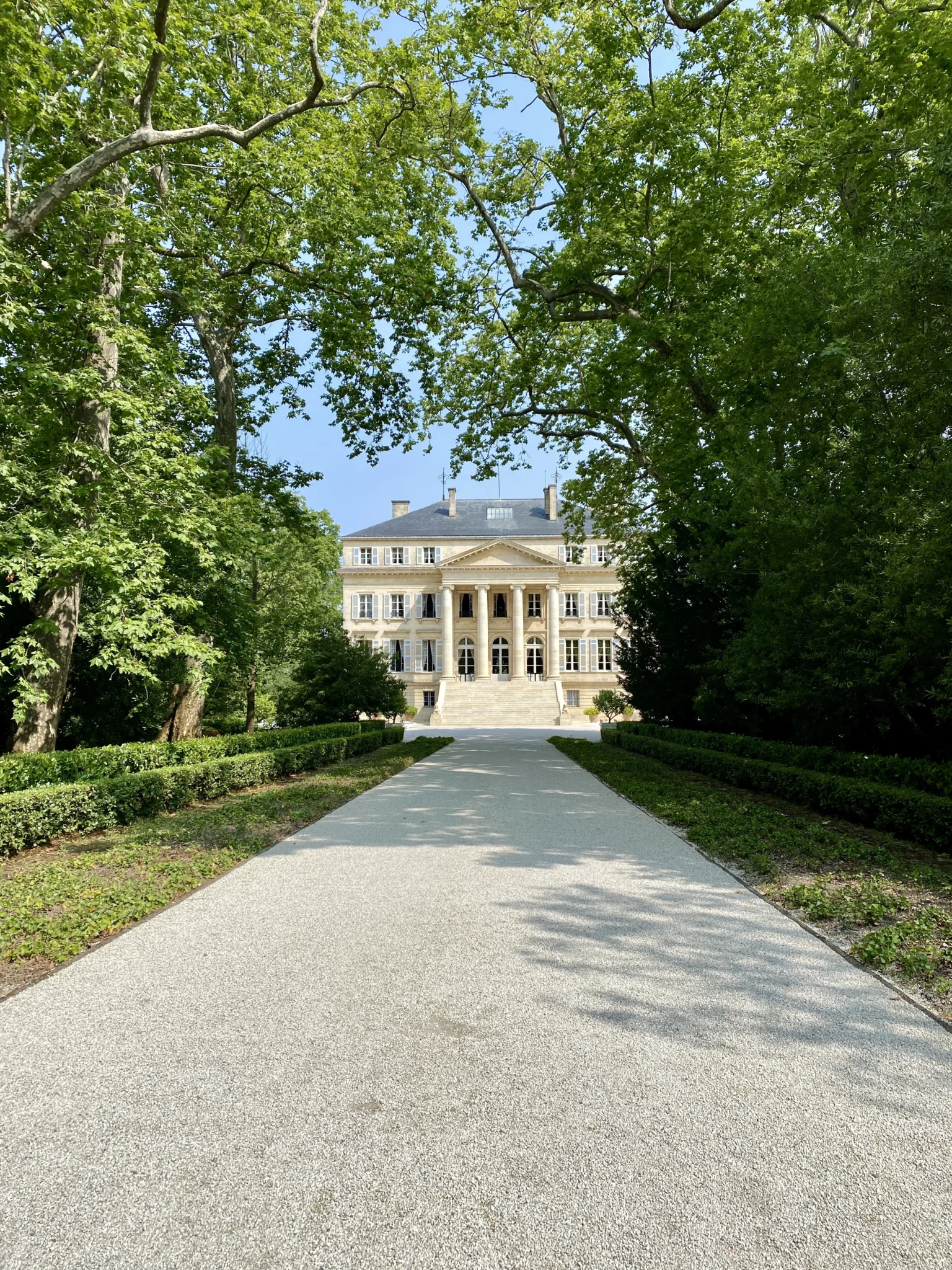
The building most visitors picture when they think of Château Margaux dates only to the early 19th century. In 1810, the estate’s new owner, the Marquis de la Colonilla, commissioned Bordeaux architect Louis Combes to design a château worthy of the property. Completed in 1815, the result, a neo-Palladian façade fronted by four imposing Ionic columns, earned Margaux its nickname: the “Versailles of the Médoc.”
The 1855 Classification: Bordeaux’s Ultimate Recognition
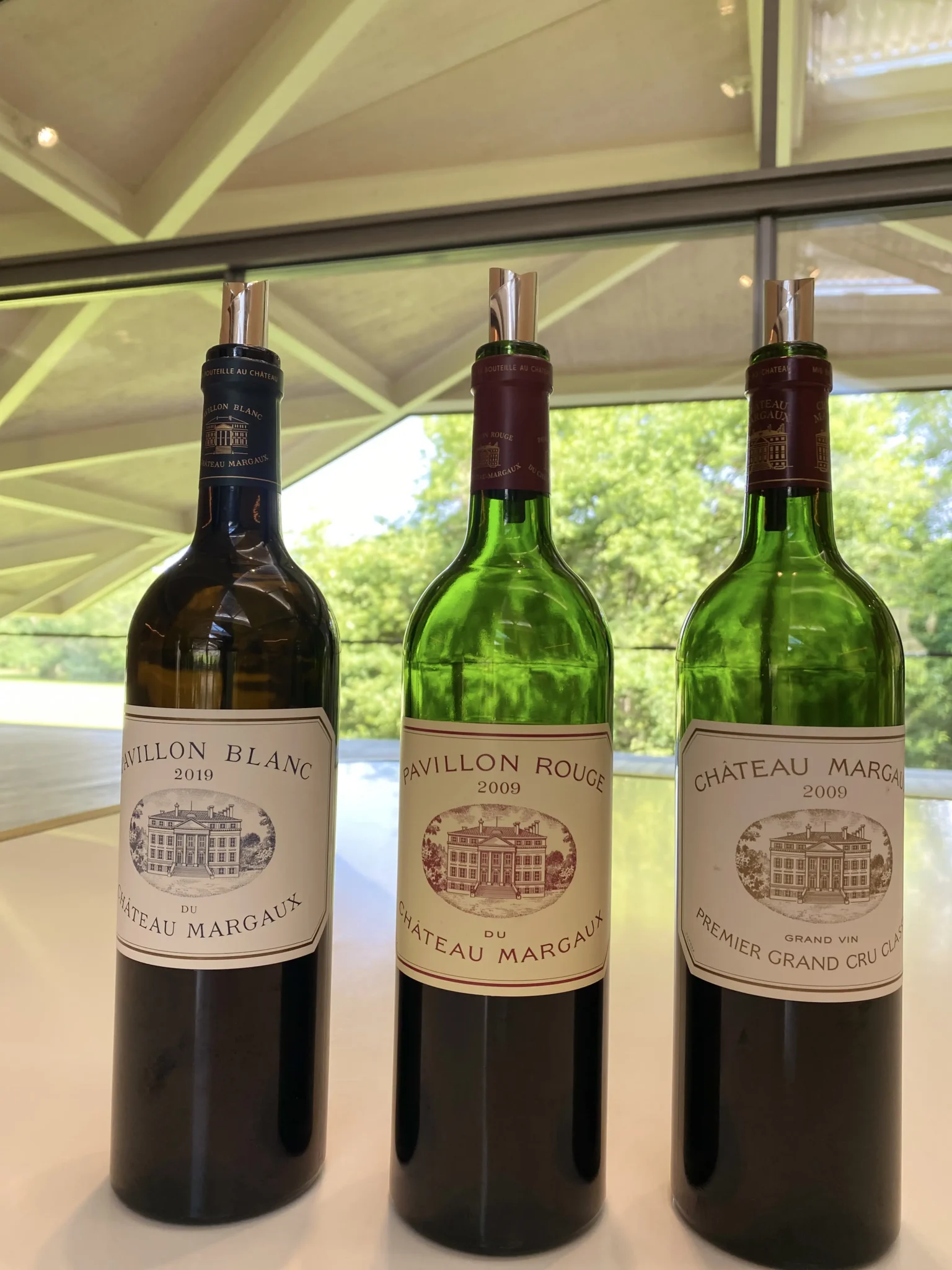
When Bordeaux’s brokers ranked the region’s finest estates for the 1855 Exposition Universelle in Paris, Château Margaux was named a Premier Grand Cru Classé; one of only five estates, across the entire Médoc and Graves, to receive Bordeaux’s highest distinction. Remarkably, it was the only estate among them to be awarded the maximum score of 20 out of 20. Nearly 170 years later, this classification remains the reference point for fine Bordeaux wine.
Hard Times and a New Beginning: From the Ginestet Family to André Mentzelopoulos
Ownership passed through several families over the following century, with the Ginestet family in control by the mid- 20th century. But the 1973 oil crisis and collapsing Bordeaux wine prices left the family unable to sustain the estate, forcing a sale in 1977. The buyer was André Mentzelopoulos, a Greek-born French businessman who had built his fortune in the grocery trade. He invested heavily and immediately in restoring the vineyards and cellars: a transformation so successful that, by the time of his death in 1980, the 1978 and 1979 vintages were already being hailed as exceptional.
The Modern Era: The Mentzelopoulos Family
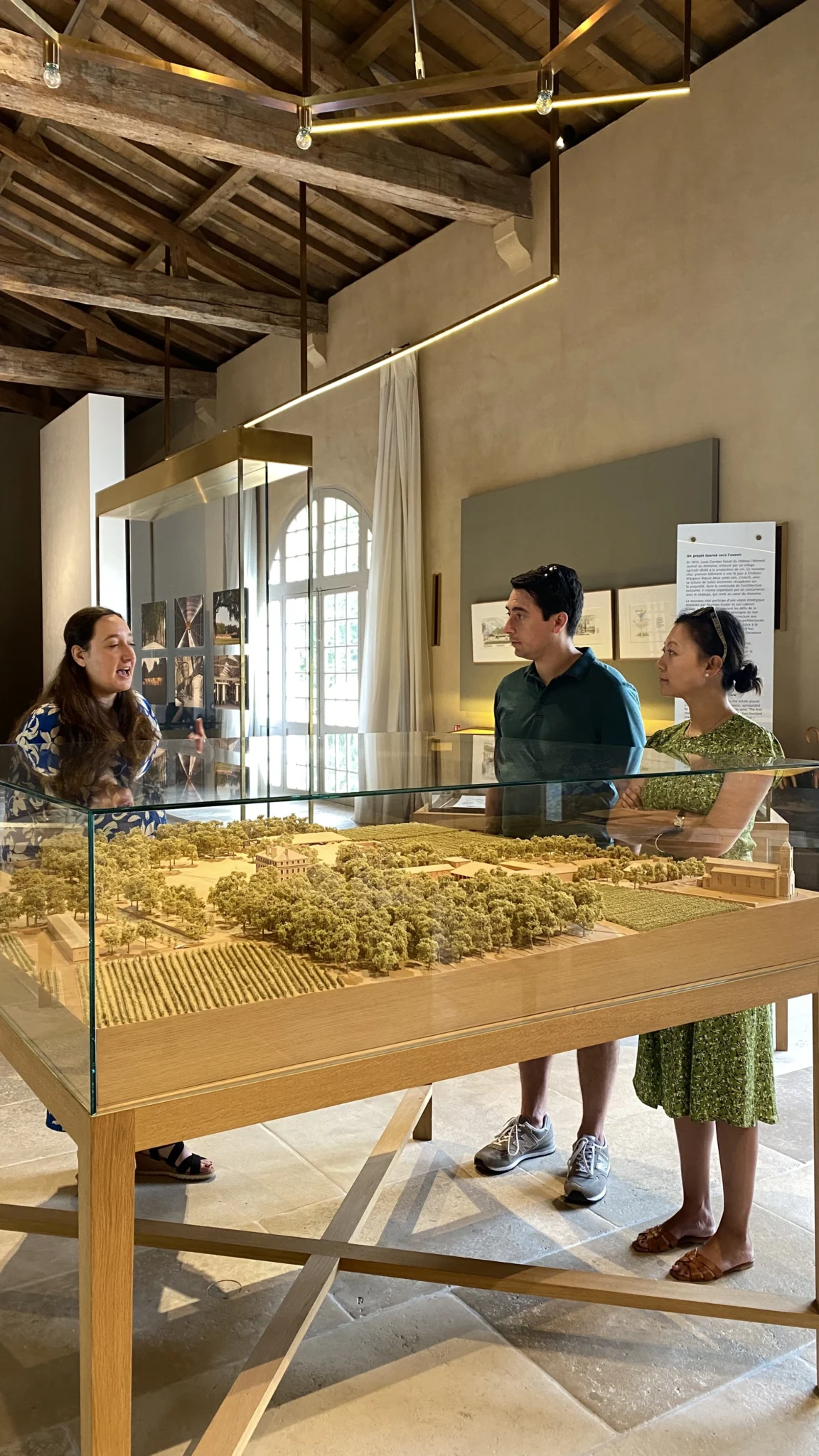
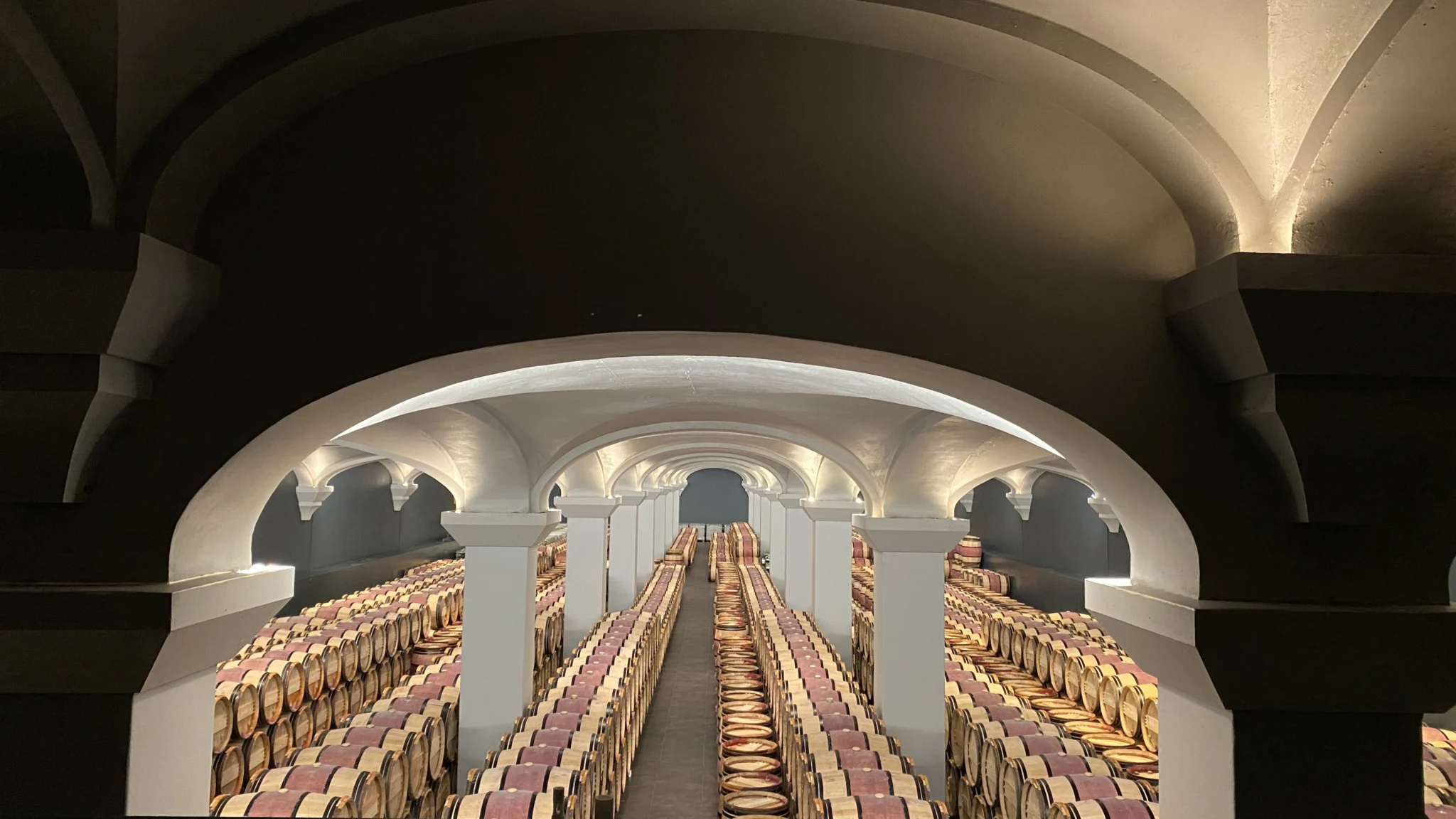
Following her father’s death, Corinne Mentzelopoulos took over the estate and has led it for over four decades, becoming its sole shareholder in 2003. Under her stewardship, Château Margaux has stayed at the summit of Bordeaux wine while continuing to modernize: in 2015, the cellars underwent a major renovation led by Pritzker Prize-winning architect Lord Norman Foster, the first significant change to the estate’s buildings since 1815. In 2023, a new generation of the family began stepping into leadership, carrying the estate’s five-century story forward.
Why This History Still Matters Today
Château Margaux’s story is, in many ways, the story of the Médoc itself: a region shaped by families who chose vines over grain, by a classification system that has outlasted nearly two centuries of change, and by owners willing to invest generation after generation in a single piece of land. Access to the estate remains exceptionally rare, reserved for only a handful of visitors each year, but it is precisely this rarity that makes it so special when the gates do open. Bordeaux With Élodie has, on occasion, arranged private visits to Château Margaux itself, alongside the other legendary estates that make a private Médoc wine tour so rewarding.