
November 13, 2026
Bordeaux vs Napa Valley: Grapes, Labels and Visits
Scale, grapes, labels and the way you visit: what really changes between Napa and Bordeaux.
100,737
hectares of vines in production in the Gironde, 2024
19,108
hectares planted in Napa Valley
54%
of Napa’s vineyard is Cabernet Sauvignon
66%
Merlot among Bordeaux’s red varieties
If you know Napa Valley, you already have a point of comparison. Bordeaux vs Napa Valley is not only a different landscape: the scale, the grapes, the way you read a label and the way you visit all change.
In short: in the U.S., a label can name the grape, and Napa is planted mostly with Cabernet Sauvignon. Bordeaux labels name the place, and blending is the region’s signature. The Gironde vineyard is also more than five times larger, and visiting works differently: Napa tourism advises booking ahead, while in Bordeaux we build the day with you. Élodie was born and raised in the Bordeaux region, minutes from the vineyards of Saint-Émilion. In 1938, her grandparents bought a wine estate in the Dordogne.
Bordeaux vs Napa Valley: two regions, two scales
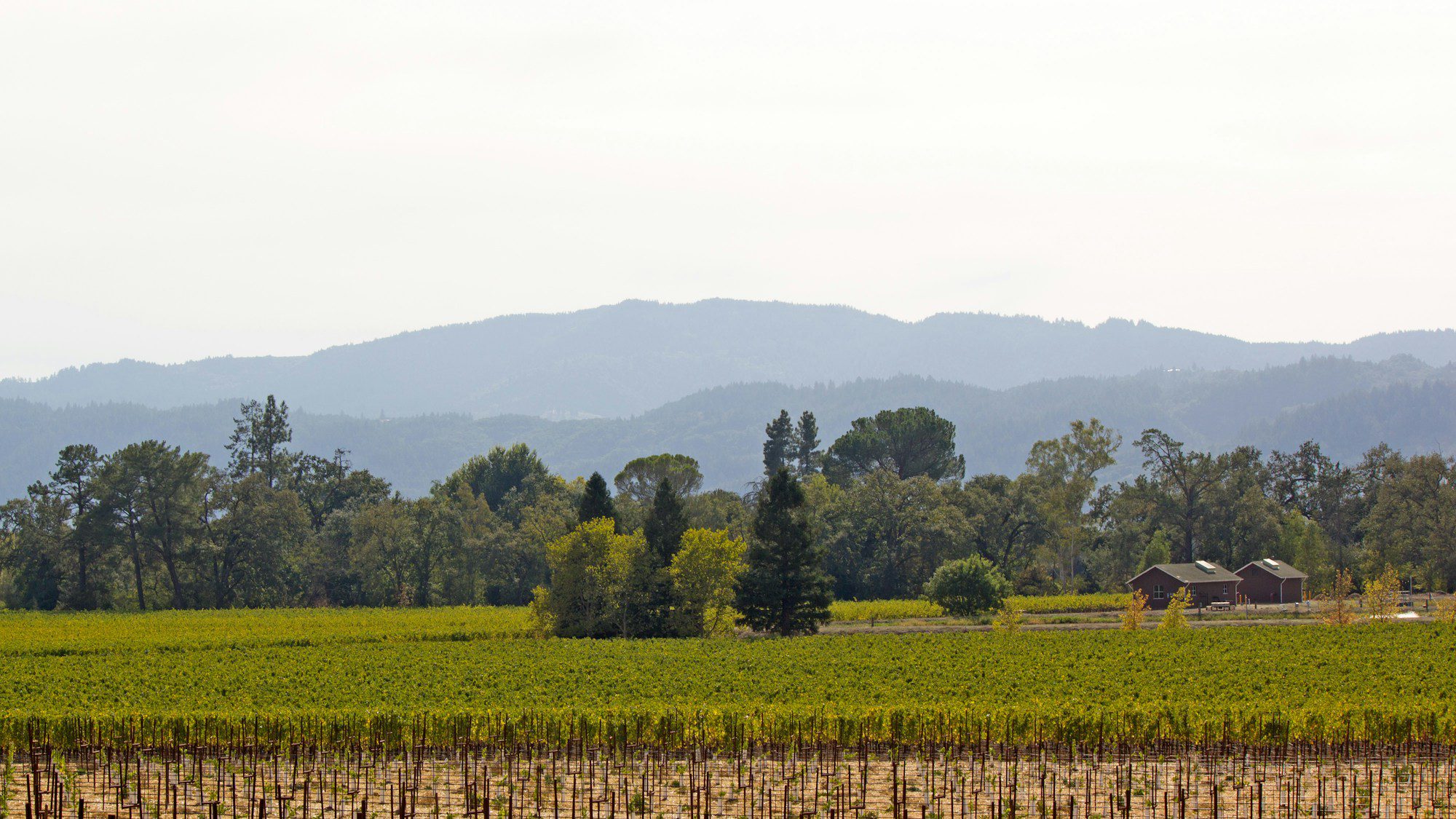
The Napa Valley floor is about 30 miles long and five miles across at its widest point. About 47,216 acres, or 19,108 hectares, are planted, within an AVA that contains 17 nested sub-appellations.
The Gironde vineyard covers 100,737 hectares in production in 2024, of which 95,000 hectares are protected designation of origin (AOP). That is more than five times the area of Napa, a rough order of magnitude based on sources from different years.
The CIVB describes Bordeaux as a mosaic of six winegrowing landscapes: Bordeaux, Bordeaux Supérieur and Crémant; Graves and Sauternes; Entre-deux-Mers, Premières Côtes de Bordeaux and Sainte-Foy; Saint-Émilion, Pomerol and Fronsac; Médoc; and Blaye and Bourg. Each has its own character.
In the glass: Cabernet on one side, blending on the other
In Napa, Cabernet Sauvignon covers 54% of the planted area, and 80% of the vineyard is planted with red grapes.
In Bordeaux, the red varieties break down into 66% Merlot, 22.5% Cabernet Sauvignon and 9.5% Cabernet Franc. For whites, Sauvignon Blanc accounts for 45%, Sémillon for 42% and Muscadelle for 5%.
Above all, Bordeaux is a region of blending. According to the CIVB, every cuvée comes from several grape varieties, fermented separately and then tasted and blended. The proportions change every year with the weather and the winemaker’s choices. Remarkable single-variety wines exist too.
In the U.S., a label can name the grape. In Bordeaux, it names the place.
Reading the label: the grape or the place
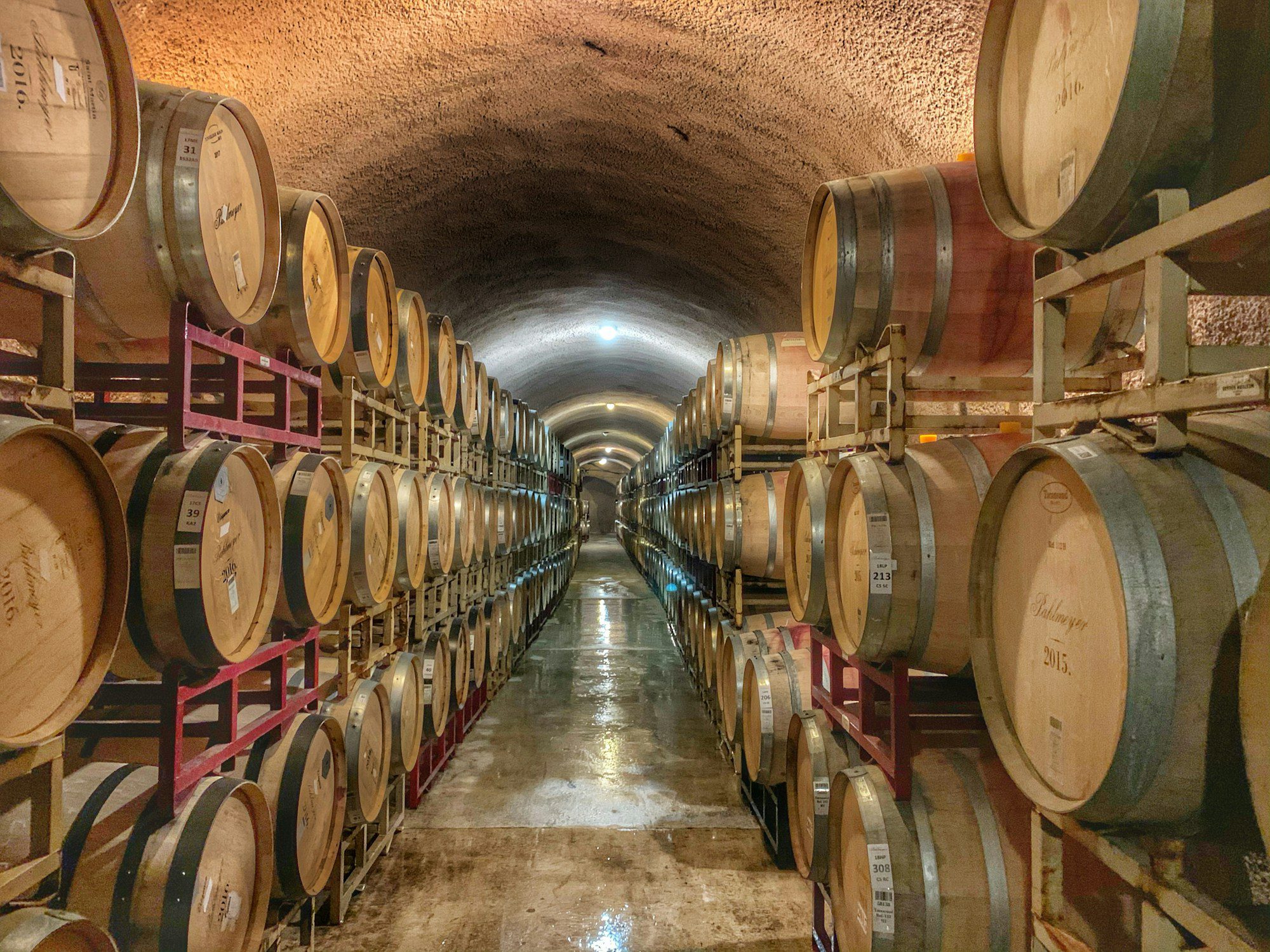
In the United States, a wine can carry a single grape name only if it contains at least 75% of that variety, grown in the appellation shown. To use an AVA name such as Napa Valley, at least 85% of the grapes must come from that area.
In France, wines are labeled by region rather than by grape. The rules of each appellation set the permitted grape varieties and the style of the wine, so the appellation name is your best clue to what is in the bottle.
Visiting
Visiting: two ways to plan your day
In Napa, booking ahead is advised. In Bordeaux, we build the day with you.
In Napa
About $40
Visit Napa Valley advises booking ahead, as popular wineries fill up weeks in advance. A basic tasting costs about $40 on average, from $20 to $200 or more. It suggests two or three visits a day and a tip for your host.
In Bordeaux
About 8 hours
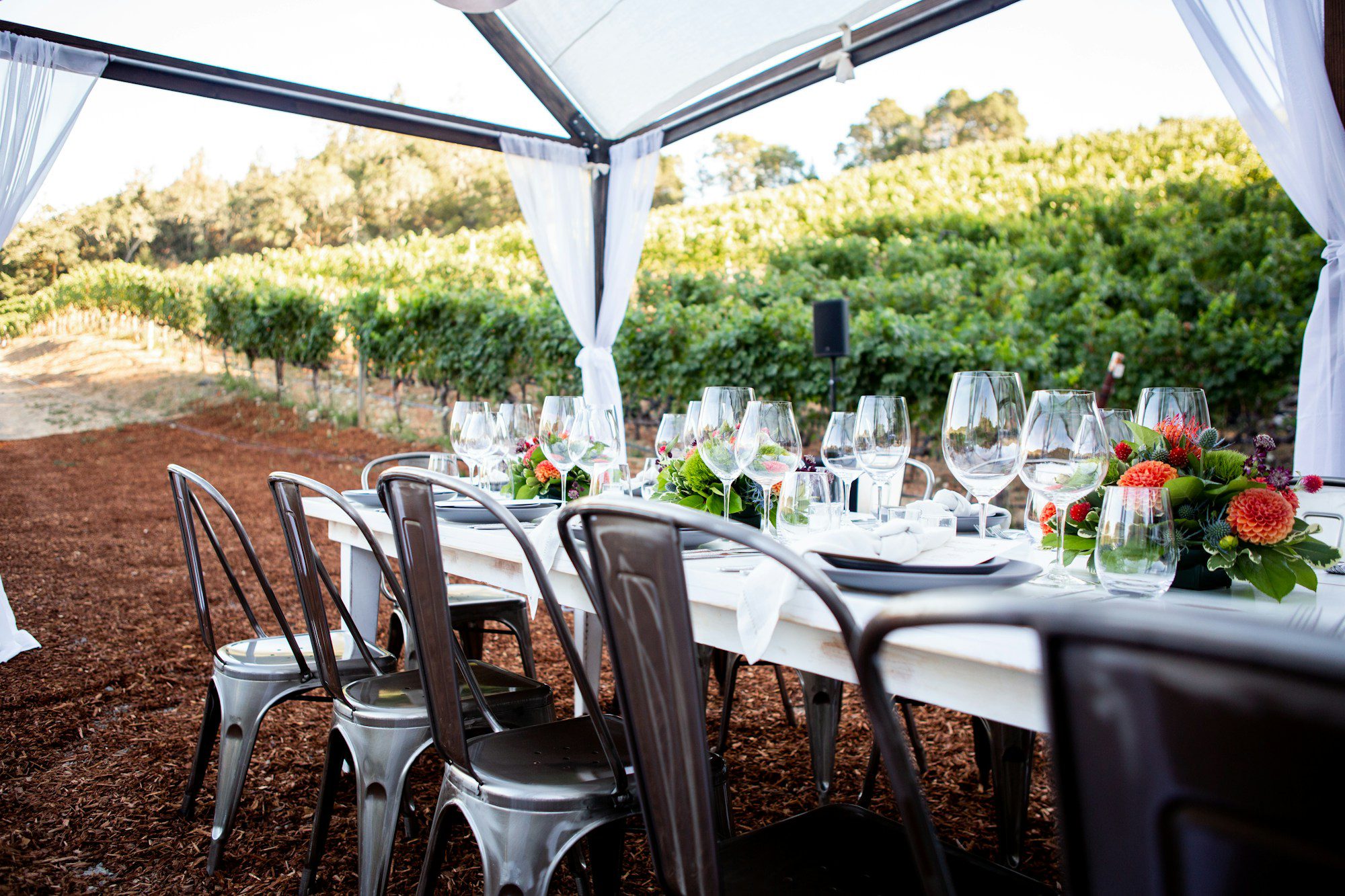
Every day is private and tailor-made: your visits, hotel pick-up and a lunch we reserve for you (not included in the price). We organize visits with each property according to its availability.
Where to start
Médoc or Saint-Émilion
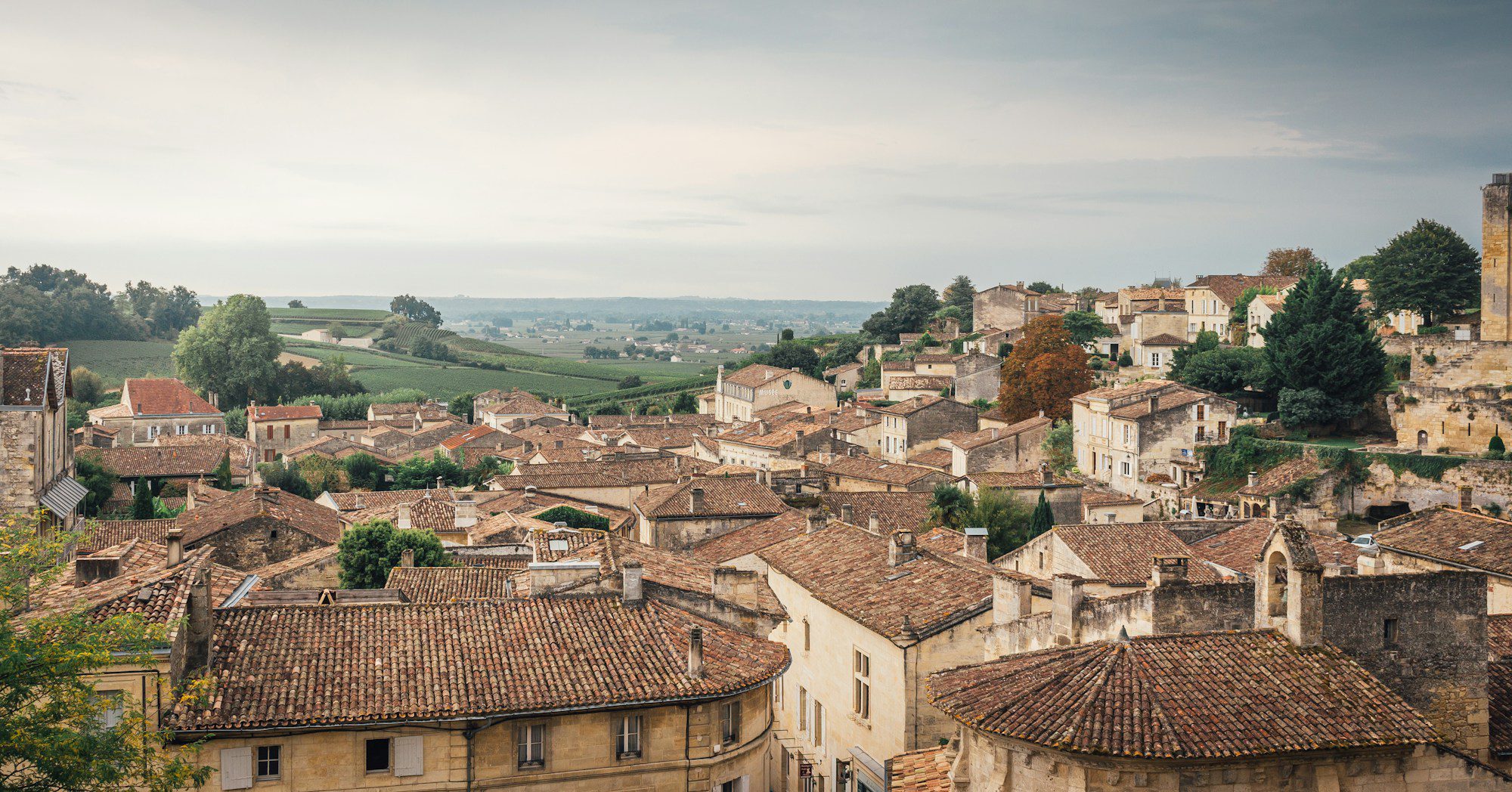
For the Cabernet you know from Napa, look at the Médoc, which the CIVB calls a stronghold of Cabernet (our Médoc tour). If Merlot appeals to you, look at Saint-Émilion and Pomerol, shaped by Merlot and elevated by the Cabernets (our Saint-Émilion tour).
Sources
Sources: Napa Valley Vintners (Fast Facts, 2024 crop report); Visit Napa Valley; CIVB (grape varieties, blending, designations); DRAAF Nouvelle-Aquitaine, Agreste no. 74 (June 2025); U.S. federal wine labeling rules (27 CFR 4.23 and 4.25); Wine Folly.
Private tour
Plan your Bordeaux wine tour
Tell us what you enjoy drinking in Napa, and we will help you find the Bordeaux wine region that suits you best.
Not sure where to begin? Read Saint-Émilion or Médoc: which one first, or see how much a private wine tour in Bordeaux costs.